

Penal Code 647(f) is California’s public intoxication law. It defines and outlines the criteria by which a person may be found guilty of being intoxicated in a public place and it also sets the penalties for committing such a crime. Though this law may sound relatively straightforward on paper, it’s actually a very nuanced and heavily layered one that requires a lot of proof in order to charge someone with it. And since it’s very likely that you, or someone you know, partakes in drinking it’s especially important to understand the scope of this law so that you know your rights.
Okay, So How Drunk is Drunk?
Glad you asked! This law is very clear as to how intoxicated a person needs to be in order to get charged with a Penal Code 647(f) violation—simply being tipsy, or even wasted, in a public place is not enough to warrant being charged. You would need to be so intoxicated that:
What’s important to note is that if neither of the above points holds true, and you are merely drunk in a public place, like a bar or a street, then you are not guilty of violating this penal code...no matter what an annoyed, or even aggressive, cop might say!
Words carry lots of weight in the legal realm because what is meant and conveyed in the law can be used to argue in favor of, or against someone in a case. As it pertains to public intoxication or “drunk in public” charges, wording is very relevant. This is because the formal legal definition of being “drunk in public” bears with it three very key elements that must hold true in order for the charge to be justified. This means that the prosecutor has to show these elements are true in court for a defendant to get convicted of violating Penal Code 647(f). The elements are:
Therefore, simply being really drunk, even drunk enough to blackout or pass out, does not automatically make you guilty of violating Penal Code 647(f). So, while on the surface it may seem easy enough to denote a law for public intoxication, it actually becomes a very technical and specific process. We can use those technicalities to our advantage.
First off, let’s zero in on that first element of the definition we mentioned above. To be willingly under the influence means that you got intoxicated of your own free will. Therefore, the prosecutor would have to establish that you intentionally got drunk or intoxicated and that it was something you did by your own deliberate choice. So, let’s say you were drugged or someone slipped something in your drink. In that scenario, you could not be found guilty of violating Penal Code 647(f). Similarly, let’s say you thought you were enjoying a non-alcoholic beverage, but someone changed your drink and gave you something else...in that situation you would still not be guilty because you did not get intoxicated willingly.
All Publicity is Good Publicity...right?
Now about that second crucial element in the definition—“public”. As far as California law is concerned, a public place is anywhere outside of a private residence where people are free to walk. Some obvious examples that fit the definition would be places like a shopping center, a bar, a restaurant, a movie theater, a street, and a park or a beach. There are some less obvious places that this definition also covers, such as shared, communal hallways or lounges in apartment complexes, the front yard, front porch and driveway of someone’s home, and a parked car on a public road. Similarly, a hotel hallway is a public place, but the actual hotel room is not.
It is important to know that a place can be considered ‘public’ even if there aren’t any other people actually present at that location: what matters is that it is accessible to the public, not that anyone is there or likely to be there. On the other hand, some examples of private areas would be places like private homes, apartments or residences, and garages, sheds, guest houses, or backyards. Finally, it’s imperative to keep in mind that you cannot be found guilty of being intoxicated in public if you got drunk or inebriated in a private place, but then were forced out to a public place. There have been instances where people (sometimes even law enforcement!) force intoxicated people to go with them to a public place and then arrest or accuse them of being drunk in public. That’s why it is so important to always know your rights.
Safety First!
The whole third premise of this penal code rests upon safety, specifically denoting when someone poses a threat to safety. The law specifies that a person who is so intoxicated that they are unable to care for themselves or for those around them are considered drunk enough that they pose a risk to the wellbeing of themselves and to those around them. To illustrate this, picture two different people, Leo and Kevin, both of whom are outside of an LA bar at 2 in the morning.
Leo is trying to call for an Uber when a cop comes up to him and questions him. Leo is able to answer the cop’s questions, and while the cop can both see and smell that Leo is definitely drunk, he can also tell that Leo is coherent enough to get himself into a cab. Therefore, Leo doesn’t pose a threat to himself or to anyone else outside that bar. However as the cop begins to leave, he notices Kevin, who is also trying to find his Uber. The difference is that Kevin has wandered onto the middle of the road to see if any of the cars are his cab and as a result the drivers are forced to slam their brakes to avoid running into Kevin. He is clearly incoherent and he trips and falls right in the middle of the street.
Given that situation, it’s clear that both Leo and Kevin are drunk, but what matters is that Leo’s actions aren’t threatening his safety or the safety of others, whereas Kevin’s drunken shenanigans are endangering his life as well as the safety of others around him. Thus, Leo would not be charged with violating Penal Code 647(f), but Kevin very well may be. The cop could notice that Kevin’s level of drunkenness is so extreme that it actually does pose a safety hazard and so Kevin can be found guilty of a Los Angeles public intoxication charge.
And While You’re at it...Try Not to Get in the Way Either
The second half of that last component deals with obstructions of public places. Going back to our previous example, Leo gets in his cab and heads home, whereas Kevin stumbles and falls in the middle of the street. Let’s say he manages to drag himself back onto the sidewalk, where he passes out from being so drunk. In this situation, people who are walking on that sidewalk may be forced to step onto him, step over him, or otherwise go off the sidewalk to walk around him. Therefore, Kevin is blocking the free passage of people in a public space and that is also grounds for a potential public intoxication arrest.
The penalties of penal code 657(f) are more than just a bad hangover. If convicted of a Penal Code 647(f), the penalties include the following:
However, if you get a “public intoxication” conviction three or more times within a 1 year period, then you will have a minimum sentence of 90 days in county jail. The court can reduce that sentence down to a 60 day period, provided that you spend those 60 days in an alcohol recovery program and treatment center.
Sometimes a Good Legal Defense...is a Great Offense
A seasoned Glendale criminal defense attorney will explore several methods of protecting you by incorporating the details of your case as well as the circumstances leading up to the alleged public intoxication charges. The following are some examples of defenses that your lawyer may use to fight the accusations:
If you or a loved one has been accused of violating Penal Code 647(f), don’t hesitate to give us a toll free call at (310) 943-1171 to speak with our experienced California defense attorneys today. Our lawyers in Glendale, Los Angeles, California, are dedicating to providing all of our clients with the highest quality legal services possible.
KAASS LAW is authorized to practice law in California. The above content is intended for California residents only. This content provides only general information which may or may not reflect current legal developments. KAASS LAW expressly disclaims all liability in respect to actions taken or not taken based on any of the contents of this website. The above content DOES NOT create an attorney-client relationship. KAASS LAW does not represent you unless you have expressly retained KAASS LAW in person at the KAASS LAW office. KAASS LAW helps clients in: Los Angeles, Burbank, Hollywood, Glendale, Van Nuys, North Hollywood, Studio City, Highland Park, Eagle Rock, Sunland, Tujunga, Sylmar, San Bernardino, La Crescenta, La Canada, Beverly Hills, Westwood, Santa Monica, Brentwood. Pacoima, Montebello, Commerce, Alhambra, Downey, Bell, Maywood, Walnut Park, Vernon, Lynwood, Echo Park, Silverlake, Mission Hills, Northridge, Woodland Hills, Encino, Canoga Park, North Hills, Porter Ranch, Chatsworth, Reseda. Get Directions on Google Maps

California Penal Code § 1000 indicates an arrangement commonly known as a pretrial diversion or a deferred entry of judgment, in which a qualifying drug defendant requests to get their case put on hold for a set period of time while the defendant completes a state-approved drug rehabilitation or educational program. Penal Code § 1000 is very important because it enables some defendants to avoid conviction entirely with the deferred entry of judgment, or DEJ for short (this is also referred to as a pretrial diversion).
Whether DEJ applies for any given case will depend on several factors, such as age, previous criminal history, and the crime in question. For instance, DEJ is more restricted for adults, applying only for certain types of drug offenses. On the other hand, for juveniles, deferred entry of judgment usually applies for most first-time felonies.
First, a defendant asks to complete an approved program in any county in California. The court determines the eligibility of the defendant and, once approved, provides the defendant with a set period of time in which to complete the program. California courts have both . A list of state-approved programs can be found at the courthouse in which the hearing took place. All of these programs will assess the defendant and must ensure a minimum of 20 hours of drug education or rehabilitation. At the end of the program, an assessment report must be provided to the court, detailing the defendant’s progress and successful completion of the program.

L-1 non-immigrant visa is for intracompany transferees who come to the United States to temporarily work for a U.S. company. If you are a foreign worker overseas, a U.S. company may qualify to transfer you with an L-1 visa, as an overseas employee, to the U.S. to work as a manager, executive, or specialized knowledge personnel.
“A manager generally refers to someone who supervises and controls the work of other supervisory, professional managerial employees. The L-1 visa classification also includes managers of an essential function within the organization or a department or subdivision of the organization.”
“An executive generally refers to someone who primarily directs the organization or a major component or function of the organization.”
“An individual with specialized knowledge is someone who possesses special knowledge, of the organization's product, service, research, equipment, techniques, management, or other interests and its application in international markets, or an advanced level of knowledge or expertise in the organization's processes and procedures.”

Only certain number of H-1B petitions can be approved each year. There is an annual limit for new admissions in the H-1B category. An H-1B number must be available at the time of adjudicating a new petition, and USCIS will not approve an H-1B petition once the annual cap has been reached.
Only 65,000 new H-1B petitions can be approved each fiscal year. However, it should be noted that this number is reduced under the US-Singapore and US-Chile Free Trade Agreements. Under these agreements, 6,800 H-1B numbers shall be available for citizens of Chile and Singapore each fiscal year. Hence, the actual annual cap is not 65,000 but 58,200. If any part of the number set aside for Chile and Singapore is not used during a fiscal year that number is added to the general annual cap for the next fiscal year. It is also worthy to mention that only initial H-1B petitions are subject to the annual cap. Petitions for sequential employment, concurrent employment, extensions of stay, and amended petitions are not counted against the gap.
There is an exemption from H-1B annual cap for 20,000 foreign employees with advanced degrees from US universities. To fall under this exemption, the foreign employee must have a master’s or higher degree from a US university. A master’s degree is a degree for which a bachelor’s degree in any field is required. The place of the specific degree in the academic hierarchy of degrees should be considered in order to determine whether it qualifies as a master’s or higher degree or not. If the petition qualifies for another exemption, in addition to the advanced degree exemption, officers shall apply the exemption that does not include numerical limitations before applying the advanced degree exemption.

Consumers are increasingly purchasing unmanned aircraft, or drones, with estimates predicting they will buy around 700,000 this year alone. It is important to know and understand which laws and regulations govern the recreational use of drones.
The Federal Aviation Administration (FAA), with state and local governments, regulate the recreational use of drones. The main purpose of these regulations is to ensure public safety. Thus, the FAA has set specific limitations for such use. For example, the FAA limits recreational drones to daytime use only.

California Penal Code 484(a) states: Every person who shall feloniously steal, take, carry, lead, or drive away the personal property of another, or who shall fraudulently appropriate property which has been entrusted to him or her, or who shall knowingly and designedly, by any false or fraudulent representation or pretense, defraud any other person of money, labor or real or personal property, or who causes or procures others to report falsely of his or her wealth or mercantile character and by thus imposing upon any person, obtains credit and thereby fraudulently gets or obtains possession of money, or property or obtains the labor or service of another is guilty of theft.
Generally, a defendant can be charged with if he or she stole property valued over $950. Petty theft crimes are possibly the most common theft crimes prosecuted in Los Angeles County. According to an released by the LA Times last year, "Property crimes, which include burglary, theft and auto theft, increased by 7%, largely because of an 11% increase in grand- and petty-theft cases, which together jumped from 964 during the first half of last year to 1,074 during the same period this year." Luckily, an experienced Los Angeles criminal defense attorney may help in reducing or dismissing Grand Theft charges and or penalties; including:

Running a business comes with countless responsibilities, and dealing with unexpected property damage is one of the most challenging. Fire, vandalism, water damage, and natural disasters can severely impact business operations, leading to financial loss. In these situations, having a reliable business property damage attorney is crucial. KAASS LAW, based in Los Angeles, has extensive experience in handling property damage claims. Our legal team works with business owners to navigate the complex insurance claim process and ensures they receive the compensation they deserve. We successfully negotiated and recovered $130,000 for a local business's property damage claim. This outcome shows our expertise in securing favorable settlements. Our clients can expect personalized attention and tailored legal solutions to protect their interests. This guide will show how our attorneys can assist you in safeguarding your business after property damage and guide you through dealing with insurance companies.
Time is crucial when dealing with property damage. You must juggle documenting the damages, communicating with adjusters, and resuming business operations. KAASS LAW's attorneys understand these challenges and the specific local regulations that affect property damage claims in Los Angeles and Glendale. We focus on offering high-quality legal services to every client. Our aim is to maximize your recovery so you can get your business back to full strength.

California VC 23222(b) driving in possession of marijuana only pertains to marijuana that is not in a concentrated form, such as, hash; nor does it pertain to large amounts of marijuana.
Unlike, California Health and Safety Code 11359 Possession of Marijuana for Sale, which pertains to being caught with a large amount of marijuana in your vehicle. California Vehicle Code 23222(b) punishes those who are found guilty of driving with up to 1 ounce of marijuana in their cars.

Dealing with wildfires and the damage they cause can be a horrific experience.
Specifically, The Los Angeles County Fire Department is currently battling the Santa Clarita Brush Fire, which has expanded over more than 20,000 acres. More information provided by the LA Times. Has your home been damaged by fire or smoke? Luckily, your homeowners insurance may be able to help you and your family. Your home may be covered by your homeowners insurance policy. While your dwelling coverage can help with expenses related to repairing or rebuilding your home. Depending on your policy limits you may be able to repair and rebuild your home without any out-of-pocket expenses. KAASS LAW property damages claims team standing by to assess potential Santa Clarita fire loss claims. Please call our office at (310) 943-1171 and we can help you file a fire damage insurance claim in Los Angeles and surrounding cities.
Many other types of coverage can provide you and your family with protection and financial safeguard. Personal property coverage may help pay for replacement costs for belongings or help replace any of your belongings that were destroyed due to a fire or wildfire.
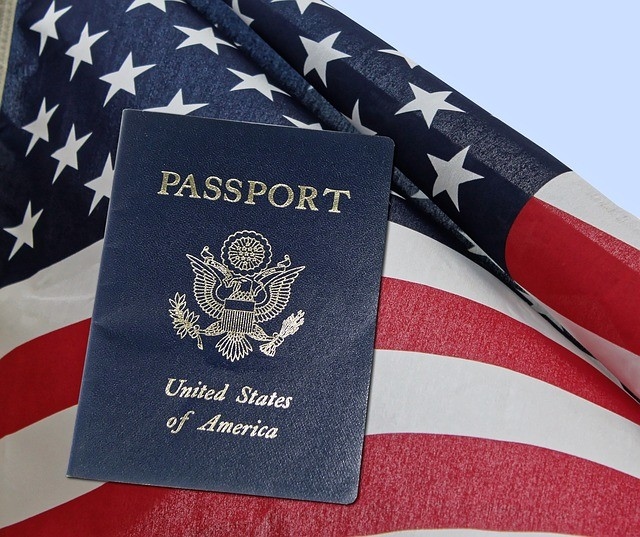
Did you know you can become a permanent United States resident by investing money into a US business?
If you are interested in becoming a US permanent resident via EB-5, below are a few things you should now about EB-5 investment program:
The immigrant investor must invest or be actively in the process of investing $1.000.000.
The qualifying amount of investment is $500.000 for targeted employment areas which are rural areas and areas with high unemployment rate. A mere intent to invest or prospective investment arrangements without present commitment will not suffice.
The investment must take the form of contribution of capital that has been placed at risk for the purpose of generating income.
The USCIS rules define capital to include cash, cash equivalents, equipment, inventory, other tangible property, and indebtedness secured by assets owned by the investor. The required investment cannot be made in the form of a loan to the company. The foreign investor also has to show that the invested capital was obtained through lawful means.
Upon finishing the DEJ program, the court has an obligation to dismiss the drug charges against you. As such, the benefits of completing the program are that:
Throughout your participation in the court-sanctioned program, the court may determine that your efforts or participation are not satisfactory, or that some other issue has come up. Any of these may disqualify your eligibility for the diversion program. Some of these reasons can include:
Basically, a defendant can be removed from the DEJ program if at any point they fail to complete the program satisfactorily or if they get convicted of a felony or a misdemeanor involving violence. In that case, the defendant will get dropped from the program and sentenced per the underlying charge(s).
There are two factors that are responsible for determining your eligibility for a DEJ. The first is the type of drug offense itself and the second is your previous criminal history.
According to California Penal Code § 1000, some drug offenses are eligible for deferred entry of judgment. Most often, these are:
*A ‘controlled substance’ refers most commonly to such drugs as Cocaine, Marijuana, Heroin, Methamphetamines, Ketamine, Ecstasy, Vicodin, Codeine, and GHB.
Your prior criminal history is the other major factor used to determine whether your case is eligible for a DEJ. The conditions are:
You should know that there are some strings attached with the deferred entry of judgment. It does require the defendant to plead guilty, with the condition that the court does not enter judgment. Thus, the final sentencing, or conviction, is never finalized. The case is therefore left in a limbo period, or deferment. During this period, the defendant must then successfully complete the appropriate, state-approved program. The court will look over the details of the case again and if everything was correctly done, the charge against the defendant will be dismissed.
The details surrounding the deferred entry of judgment can get complicated and murky. We can help you to assess if a pretrial diversion or a DEJ is possible given the details of your case. To speak to an Glendale criminal defense attorney, please call our firm at (310) 943-1171 or email us at [email protected].
KAASS LAW is authorized to practice law in California. The above content is intended for California residents only. This content provides only general information which may or may not reflect current legal developments. KAASS LAW expressly disclaims all liability in respect to actions taken or not taken based on any of the contents of this website. The above content DOES NOT create an attorney-client relationship. KAASS LAW does not represent you unless you have expressly retained KAASS LAW in person at the KAASS LAW office. KAASS LAW helps clients in: Los Angeles, Burbank, Hollywood, Glendale, Van Nuys, North Hollywood, Studio City, Highland Park, Eagle Rock, Sunland, Tujunga, Sylmar, San Bernardino, La Crescenta, La Canada, Beverly Hills, Westwood, Santa Monica, Brentwood. Pacoima, Montebello, Commerce, Alhambra, Downey, Bell, Maywood, Walnut Park, Vernon, Lynwood, Echo Park, Silverlake, Mission Hills, Northridge, Woodland Hills, Encino, Canoga Park, North Hills, Porter Ranch, Chatsworth, Reseda.
Requirements for obtaining L-1 visa status are:
Before being transferred to the U.S. company with an L-1 visa, the employee must have completed one continuous year of work outside the U.S. with the overseas company. However, if an employee works in the U.S. during that year, he or she will need to equally work for the overseas company in order to obtain a total of at least 12 months employment overseas.
The overseas company that the employee works for during the required period of one year must be related, such that it must be the same employer, subsidiary, or affiliate of the U.S. company. To prove the amount of time worked, the employee may include pay stubs, payroll records, or tax records.
In order for the company to be a qualifying organization, it must be doing regular, systematic, and continuous business in the U.S. and another country during the entire duration of the transfer.
The transferee must fill in at least one of the following three capacities: executive, manager, or specialized knowledge. There is no requirement for the employee being transferred to the U.S. to perform the same services as he or she did overseas; they may be employed in a different capacity in the U.S. For example, an individual with specialized knowledge overseas may be transferred to work in the U.S. as a manager. The same is possible with an employee working as a manager overseas and being transferred to the U.S. as an employee. Provided that the position held by the employee was for a period of one year before transferring with an L-1 visa.
As explained above, the employee must not fill in the same position as he or she did overseas. However, the employee must be working in a capacity involving duties of an executive, manager, or specialized knowledge personnel.
The employee must be qualified for the position he or she is transferring to occupy. United States Citizenship and Immigration Services (USCIS) require proof of such qualifications by showing prior education and experience. This proof must be presented with the L-1 petition.
The employee must intend to depart the U.S. after the completion of his authorized stay. However, an L-1 employee can seek permanent residency in the U.S. if he qualifies on another basis.
An individual, entering the United States in L-1 status, will stay for the time required by the U.S. company, up to three years maximum. However, up to two years of extension can be authorized in increments. A maximum stay for managers and executives (L-1A) is seven years, where as for specialized knowledge personnel (L-1B), it’s five years. An employee with specialized knowledge may later qualify for a managerial or executive position within the U.S. company only if the specialized knowledge employee has been performing managerial or executive duties for six months before requesting an extension of stay beyond what is permitted for the specialized knowledge employee, which is five-years. This distinction is important for two reasons. First, to determine the duration of the transferee’s stay. Second, because managers and executives have a potential route to obtaining permanent residency in the U.S.
Under L-2 nonimmigrant category, family members of the L-1 nonimmigrant are permitted to enter the United States. Family members only include the visa holder’s spouse or unmarried children under the age of 21. However, once children reach the age of 21, they may no longer remain in the U.S. The duration period for family members is the same as that of which the main working family member is admitted. Family members admitted in the L-2 nonimmigrant category may now be authorized to work and study while remaining in the U.S. Give us a call, our attorneys speak English, French, Spanish, Russian, Armenian, and Italian. KAASS LAW is authorized to practice law in California. The above content is intended for California residents only. This content provides only general information which may or may not reflect current legal developments. KAASS LAW expressly disclaims all liability in respect to actions taken or not taken based on any of the contents of this website. The above content DOES NOT create an attorney-client relationship. KAASS LAW does not represent you unless you have expressly retained KAASS LAW in person at the KAASS LAW office. KAASS LAW helps clients in: Los Angeles, Burbank, Hollywood, Glendale, Van Nuys, North Hollywood, Studio City, Highland Park, Eagle Rock, Sunland, Tujunga, Sylmar, La Crescenta, La Canada, Beverly Hills, Westwood, Santa Monica, Brentwood. Pacoima, Montebello, Commerce, Alhambra, Downey, Bell, Maywood, Walnut Park, Vernon, Lynwood, Echo Park, Silverlake, Mission Hills, Northridge, Woodland Hills, Encino, Canoga Park, North Hills, Porter Ranch, Chatsworth, Reseda.
During the recent years the annual H-1B cap is usually reached within a few days after the start of the filing season. USCIS decides which H-1B petitions will be approved by conducting a lottery. The petitions received within 5 business days after the start of the filing season can participate in the lottery. USCIS first conducts lottery for petitions subject to the advanced degree exemption. After that USCIS conducts lottery for petitions subject to the regular cap. Petitions not selected during the first lottery participate in the second lottery as well.
In addition to the US advanced degree exemption, there is also an exemption for employees of certain organizations. Particularly, petitions filed by institutions of higher education, affiliated or related nonprofit entities, nonprofit research organizations, or government research organizations are exempt from the annual cap. Third party petitioners can also claim this exemption if the H-1B employee will perform job duties at the qualifying organization and directly and predominantly further the essential purposes of the qualifying institution.
As it can be seen, the annual number of available H-1B visas is very limited, and there are just a few exemptions from the general cap. During the recent years the annual cap was reached within a few days after the start of the filing season. Hence, employers, willing to hire foreign workers, must have their H-1B petitions ready by the beginning of the filing season in order to get a chance to participate in the H-1B lottery.
An immigration attorney can provide you with additional information regarding such matters.
Additionally, the FAA requires recreational users of drones that weigh between 0.55lbs (250 grams) and 55lbs to register their aircraft online through the FAA website.
Similar to the FCC rules, the Los Angeles City council has recently passed an ordinance that regulates both commercial and recreational drone use. The Los Angeles City ordinance mimics the FAA rule as it limits recreational use of drones as follows:
On the state level, the California legislature has recently passed three bills concerning recreational drone use, which the governor has signed into law.
The first bill, A.B. 856 was signed into law in October of 2015. The bill expands liability for physical invasion of privacy to additionally include a person knowingly entering into the airspace above the land of another person without permission.
Moreover, A.B. 1680, was signed into law in September of 2016. This bill expands the scope of the crime of “going to or stopping at scene of emergency for purpose of viewing; interference” under California Penal Code § 402 to include the operation or use of an unmanned aerial vehicle, remote piloted aircraft, or drone, regardless of the operator's location, in the definition of a person.
Lastly, S.B. 807, signed into law in September 2016, limits the civil liability of emergency responders, volunteers, or private entities for drone damage caused while they were performing emergency services and the drone was interfering with those services.
It also limits the exposure to civil liability of a local public entity or public employee for damage, if the damage was a result of specified emergency services.
Because of the increasing popularity of recreational drone use, it is important to know and understand the laws and regulations that govern the activity. It is expected that more acts, regulating drone use, will be enacted both on federal and state level. [1] Rules are subject to waiver [2] L.A. Mun. Code, §56.31(b) [3] 2015 Bill Text CA A.B. 856 [4] 2015 Bill Text CA A.B. 1680 [5] 2015 Bill Text CA S.B. 807
KAASS LAW is authorized to practice law in California. Our lawyers in Glendale, Los Angeles County, California, specialize in multiple attorney practice areas. The above content is intended for California residents only. This content provides only general information which may or may not reflect current legal developments. KAASS LAW expressly disclaims all liability in respect to actions taken or not taken based on any of the contents of this website. The above content DOES NOT create an attorney-client relationship. Additionally, please note that KAASS LAW does not represent you unless you have expressly retained KAASS LAW in person at the KAASS LAW office.
KAASS LAW criminal defense attorneys helps represent clients in Los Angeles, Burbank, Hollywood, Glendale, Van Nuys, North Hollywood, Studio City, Highland Park, Eagle Rock, Sunland, Tujunga, Sylmar, San Bernardino, La Crescenta, La Canada, Beverly Hills, Westwood, Santa Monica, Brentwood. Pacoima, Montebello, Commerce, Alhambra, Downey, Bell, Maywood, Walnut Park, Vernon, Lynwood, Echo Park, Silverlake, Mission Hills, Northridge, Woodland Hills, Encino, Canoga Park, North Hills, Porter Ranch, Chatsworth, Reseda.
Generally, the court will often look at various factors surrounding the charges, such as the value of the property that was allegedly stolen, prior criminal convictions, charges, or cases, and the defendant intends to permanently deprive the owner of the property.
In Los Angeles, a majority of petty theft cases involve "larceny", otherwise known as shoplifting Many times, defendants caught shoplifting are merely booked and released from jail with only a petty theft citation. However, even if the defendant is booked and released from jail immediately, that does not necessarily decrease the chances of facing less serious penalties, such as jail time. Theft charges may also affect immigration status because the charges involve a crime of "moral turpitude".
Example 1: Theft Under Penal Code 484 and 488: Jose is a lawful immigrant and has a pending citizenship application and was arrested for shoplifting at a Macy's Department Store in Los Angeles and is currently facing petty theft by larceny charges. Jose is charged with larceny, such charges may negatively affect his citizenship application may because theft charges are considered as "a crime involving moral turpitude".
Generally, theft by false pretenses occurs when a defendant deliberately misrepresents facts in order to obtain possession or ownership of property from another. In order to be charged with theft by false pretenses, prosecutors are required to prove:
Larceny occurs when:
Call our office at (310) 943-1171 or contact us via email at [email protected] to schedule a free consultation with a Glendale criminal defense attorney. Our lawyers in Glendale, Los Angeles, CA, are highly dedicated to serving to needs of our clients.
KAASS LAW Address: 701 North Brand Blvd. Suite 100 Glendale, CA 91203 Phone: (310) 943-1171 Email: [email protected]
Our experience means we know the common tactics used by insurance companies to minimize payouts. We thoroughly understand insurance policy language, which allows us to fight for your rights.
Business property insurance is a crucial part of any company’s risk management plan. It covers your business's physical assets, including the building, equipment, inventory, and furnishings. When your property suffers damage, insurance should help cover repairs or replacements. Unfortunately, insurance companies sometimes undervalue or deny claims, making it difficult for business owners to get what they need. An experienced property damage attorney can make a big difference. At KAASS LAW, we know the tactics insurance companies use. We understand the language in business insurance policies and fight to get you the benefits you deserve.
Insurance claims can be full of loopholes and technicalities. Our attorneys know how to identify and counter these tactics, ensuring your claims are handled fairly. We are on your side.
Property damage can happen in many ways, and each type of damage requires a different approach. Here are the most common types of business property damage claims we handle:
Fire damage is among the most devastating for businesses. Even if the building remains intact, smoke can destroy inventory, equipment, and documents. Fires often lead to long business interruptions. Recovering your losses fully requires proper legal assistance.
Water damage occurs due to natural disasters, plumbing failures, or leaks. It can harm the building, electronics, inventory, and documents. Insurance companies may claim that the damages were pre-existing or preventable. We ensure that your claim is handled fairly.
Vandalism or theft can lead to serious financial loss. Recovering from these acts is often costly, especially when critical operations are affected. Filing an insurance claim for vandalism or theft requires strong evidence to prove the losses. We assist in compiling the needed proof to get you a fair evaluation.
Natural disasters like earthquakes, floods, and windstorms can cause severe damage. In Los Angeles, earthquakes and wildfires are common risks. Insurance policies can be tricky regarding natural disasters. KAASS LAW attorneys understand these policies and advocate for a fair claim resolution.
Property damage can disrupt normal business operations, causing financial losses. Business interruption insurance aims to cover these losses, but calculating lost income can be difficult. Insurance companies may dispute the amounts. Our attorneys work to calculate the losses and secure fair compensation.
If your business property is damaged, acting quickly is vital. Here’s what you should do:
Contact your insurance company immediately. They must be notified to begin the claims process. Delays in reporting could lead to problems later on.
Take photos and videos of all the damage. Make sure to capture everything, even minor issues. Accurate documentation is essential for filing an insurance claim.
Take steps to prevent further damage. For example, tarp a damaged roof to prevent additional issues. Insurance companies may refuse coverage for preventable subsequent damages.
Before speaking with insurance adjusters or signing paperwork, contact KAASS LAW. We will review your policy, guide you on what to do next, and help protect your rights.
KAASS LAW provides full support to business owners dealing with property damage—from filing the initial claim to final negotiations or litigation. Here’s what we do for you:
Business insurance policies are often complicated, with clauses and exclusions that impact your claim. We help you understand what your policy covers and identify recovery opportunities.
We assist with preparing all documents for the claim, ensuring deadlines are met and evidence is thorough and accurate.
Insurance companies prioritize profit, which often means minimizing payouts. Our attorneys negotiate aggressively for a fair settlement, ensuring you get the financial support to repair your property.
If negotiations do not lead to a satisfactory settlement, we are prepared to take your case to court. Our attorneys will fight for the compensation you deserve.
Recently, KAASS LAW helped a business recover $130,000 for a property damage claim. We are proud of this outcome, as it demonstrates our commitment to getting results for our clients. Although each case is different, our experience gives us an advantage in helping business owners secure the compensation they need.
We understand how stressful property damage is for business owners. Balancing the uncertainty of insurance claims with keeping your business running is difficult. Our lawyers in Glendale, Los Angeles, are experienced and dedicated to providing top-quality legal services. We focus on supporting your business during a crisis and providing legal representation that meets your needs.
If your business has suffered property damage, reach out to KAASS LAW. An experienced attorney will take care of your legal needs and guide you through the claims process. Don’t settle for less than you deserve. Contact KAASS LAW at (310) 943-1171 or email [email protected] for assistance. Let us help you recover and rebuild.
A Los Angeles criminal defense attorney can help you with the sort of legal assistance that you require regarding drug crimes in the county. Our lawyers in Glendale, Los Angeles, CA are here to help understand your legal rights. Please call our office at (310) 943-1171 or contact us via email at [email protected]
Further, homeowners insurance can also provide coverage for additional living expenses, such as hotel stay, transportation, and meals. It's important to review your insurance policy, especially for California homeowners who live in rural areas, forests, or near the mountain side.
The qualifying investment must be in a new commercial enterprise.
An enterprise established after November 29, 1990 is considered a new enterprise even if the investor did not participate in its establishment. When a person makes investment in a business established on or before November 29, 1990 the investment will qualify for E-B5 purposes if the investor establishes one of the following: (1) the investment will result in a substantial change in the business; or (2) the business will be restructured or reorganized.
The investor must be engaged in the management of the company where he invests.
This can be done either through managerial control or through policy formulation. This requirement can be satisfied by becoming a corporate officer or being a member of the board of directors. Maintaining a purely passive role towards the investment cannot satisfy the requirement of USCIS rules.
The enterprise must benefit the US economy by creating full-time jobs for at least 10 qualifying employees.
There is an exception to this rule for troubled businesses where the investment does not have to create 10 new jobs but the investor has to show that the number of existing employees is or will be maintained at no less than the pre-investment level for at least two years.
There is an annual limit of 10000 E-B5 visas per year. Until now the annual E-B5 cap has never been reached.
The investor is initially granted conditional residence for two years.
Prior to the expiration of two years the investor must file a petition requesting removal of the conditional basis of the residence. The investor must show that he still meets the conditions for participation in the program.
Do you need help deciding on what steps to take next? A Glendale immigration lawyer at KAASS LAW can help you out with any sort of legal assistance you require.