

The temptation of freedom and independence on the open road is powerful. This speaks very loud when it comes down to teenagers as they are slowly heading towards adulthood. Being a parent and or guardian for the littles, you do your best for your child to make them happy and see them smile. However, it's easier said than done. Sometimes, you want to make your kid happy by allowing them the freedom of the vehicle. As a result, the act of giving possession of a car to a minor in CA carries great legal problems and potential liability. Next time you're asked if they can take the family car for a ride, it is only fair for you to know the risk at hand. Here at KAASS LAW, we aim to enlighten our readers and clients on safety and avoiding any potential risks worth avoiding.
California law places specific restrictions and obligations on minor drivers and those who enable their driving privileges. As there are restrictions for minors when it comes to obtaining a driver's license, the legal responsibility usually falls under their parents and or guardian. Giving possession, in essence, of a car to a minor isn't something that should be done in a light-hearted fashion. There are legal consequences if things go from bad to worse.
Negligent entrustment means that you can be liable and legally responsible if you lend your car to someone you knew or should have known potentially driving negligent and or recklessly. Usually, negligence falls under the person who caused the act. However, this will go against your negligent decision to entrust the vehicle to an unfit driver.
California Code, Penal Code - PEN § 193.8 states, "(a) An adult, who is the registered owner of a motor vehicle or in possession of a motor vehicle, shall not relinquish possession of the vehicle to a minor for the purpose of driving if the following conditions exist:
(1) The adult owner or person in possession of the vehicle knew or reasonably should have known that the minor was intoxicated at the time possession was relinquished.
(2) A petition was sustained or the minor was convicted of a violation of Section 23103 as specified in Section 23103.5, 23140, 23152, or 23153 of the Vehicle Code or a violation of Section 191.5 or subdivision (a) of Section 192.5.
(3) The minor does not otherwise have a lawful right to possession of the vehicle.
(b) The offense described in subdivision (a) shall not apply to commercial bailments, motor vehicle leases, or parking arrangements, whether or not for compensation, provided by hotels, motels, or food facilities for customers, guests, or other invitees thereof."
This is one of many forms of the act of negligence.
Several factors are considered when determining if negligent entrustment occurred:
Allowing a minor to drive your vehicle also has significant insurance implications. While your insurance policy may extend coverage to a licensed minor living in your household, it's crucial to:
While the desire to provide your child with a vehicle is understandable, taking steps to mitigate the associated risks is paramount:
Situations involving minors and vehicle possession can become legally complex, especially in the event of an accident. It's crucial to seek legal guidance from KAASS LAW if:
At KAASS LAW, we're here for you and your family. We understand why you want to help your child and give them their freedom as their growing up. However, this small things can lead to bigger problem if there aren't any proper supervision of the minor. If facing these types of legal problems, contact us right away.
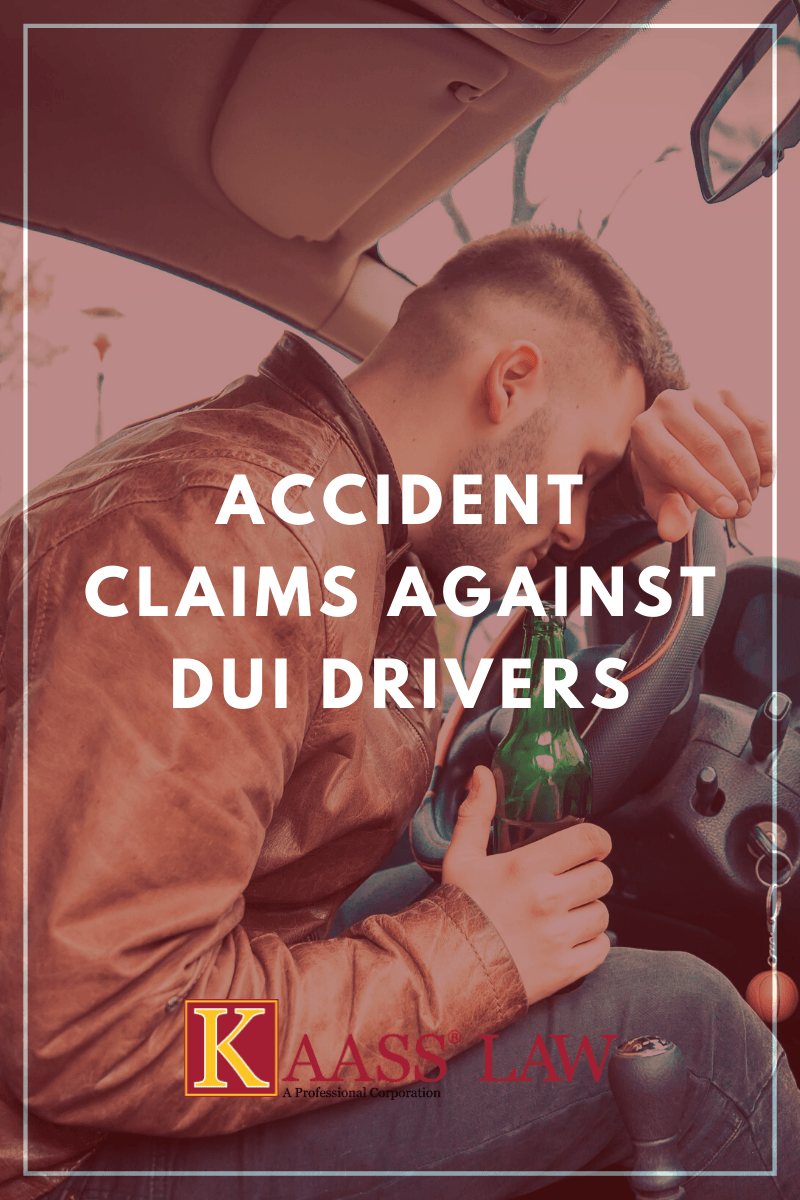
California Vehicle Code forbids driving under the influence of drugs and alcohol. The law considers a driver intoxicated if drugs or alcohol impair their ability to drive. If you have a driving accident by the fault of the DUI driver, you are entitled to seek compensation for damages as well as filing a civil lawsuit against the at fault party.
Any driver has a duty of care towards other drivers and pedestrians. This duty is also the basis of all restrictions under California law regarding intoxicated driving. Thus, if this duty of care is violated and one is injured because of such violation, the driver can be held liable. Furthermore, the DUI driver may be liable under the "negligence per se" legal theroy. In other words, if the driver violates a statute, such as driving under the influence of alcohol or drugs or exceeding the BAC limit, and causes a car accident, the driver will be liable for the injuries to the victim. To seek compensation for damages for DUI accidents, you shall prove that the driver was drunk or under the influence of drugs at the time of the accident, and this fact acted as a direct reason for the accident to happen. You do not need to wait for the drunk driver’s conviction to file a civil lawsuit. If you can present evidence of damages caused by the DUI car accident, you can seek compensation without waiting for the driver’s conviction.

When you are in an accident with a drunk driver, it seems obvious that the driver should be responsible for your losses. However, drunk drivers are not always automatically completely liable in a motor vehicle accident in California. In some cases, accidents involving a drunk driver may not result from the drunk driver themselves.
To hold a driver responsible for an accident, he or she must have been driving in an unlawful or negligent manner which directly caused the accident. This includes any number of traffic safety rule violations such as:
Liability depends on examining the facts of the accident and identifying the direct cause, which can be quite complex. Consult with one of our Los Angeles Personal Injury attorneys to help you figure out who was at fault in your accident.
You can seek compensation for the following damages caused to you as the result of a DUI accident:
To receive the compensation, you shall prove that you suffered from the mentioned damages and shall show the direct link between the negligence of the driver and your damages.
Most insurance policies cover compensatory damages if the policyholder injures someone while driving under the influence. In case the driver does not have insurance or the aggregate policy doesn't cover the damages, you shall sue the driver directly to receive compensation.
If you or a loved one has been in an accident with a DUI driver, contact KAASS LAW at (310) 943-1171 for a free consultation. Our attorneys will evaluate the details of your case and let you know what to expect and how you can proceed.
When the drunk driver’s impairment is the cause of the crash, they are completely liable for the accident. However, the driver could be drunk but follow traffic laws, and the other driver’s actions could cause the crash. For example, you may have failed to brake in time and hit a drunk driver’s car from behind. In that case, you are liable for the accident. The police will charge the other driver with a DUI, but that won't change your fault in the accident if the driver’s drunken impairment didn’t cause the crash. If it was your wrong action that ultimately caused the accident, you are at fault, regardless of the other driver’s impairment. If their drunken impairment did not cause the accident, it will most likely not be a factor in deciding liability.
California follows comparative negligence, allowing both parties to share fault in an accident based on their level of responsibility. In such cases, the settlement amount recovered to cover losses will be much lower. For example, you may have been looking at your phone while you were driving and a drunk driver swerved out of their lane and side swiped your car. In such a case, both parties will most likely share fault because both parties’ actions contributed to the accident. If you hadn't used your phone and the driver hadn't swerved while impaired, the accident would not have occurred. If you are partly at fault in your accident, our Los Angeles Personal Injury attorneys can help you figure out what percentage of the accident was your fault. You can still recover losses, but the amount will reduce by the percentage of your fault in the accident. So if you were 90% at fault, you can still receive 10% of your damages as compensation.
It is important to realize that the presence of alcohol in the driver's blood does not automatically make him or her the sole perpetrator of the accident. In order to determine fault, it is necessary to conduct a thorough investigation of all the circumstances surrounding the accident. The key factor in determining liability is causation. Between the driver's actions and the resulting consequences. In accident cases, courts and insurance companies analyze evidence such as:
If it is proven that the injured party's actions were also negligent, the amount of compensation may be reduced. This is especially true in California where comparative negligence applies.
Even if you are partially at fault for an accident, you may still be entitled to recover damages. These may include:
The amount of your payout will depend on the extent of your liability. For example, if you were found to be 30% at fault, you could receive 70% of your total damages.
Legal help is especially important in cases involving drunk drivers, as these cases often involve emotional distress and complex legal nuances. Attorneys can help you present the facts correctly, protect your interests, and seek fair compensation.
If you or a loved one has been in an accident involving a drunk driver, contact KAASS LAW (310) 943-1171 for a free consultation. Our attorneys will evaluate the details of your case and let you know what to expect and how you can proceed. Our team speaks English, Spanish, Russian, and Armenian.