

The California law that makes it unlawful to conceal a controlled substance in a fake compartment is Health and Safety Code 11366.8 HS. The crime is punishable by up to 3 years in prison and may be tried as a misdemeanor or felony. According to this law, it is unlawful for someone to:
Any box or enclosure that is intended or created to conceal a prohibited substance is referred to as a "false compartment."
Regarding the use of fictitious compartments to conceal drugs, see California Health and Safety Code 11366.8. The relevant code section forbids two acts. First, a violation of Health and Safety Code 11366.8(a) includes:
Second, a violation of Health and Safety Code 11366.8(b) includes:
A "false compartment" is any box, container, space, or enclosure contain or built to conceal any drug inside of it. However, a "vehicle" may be personal or professional in nature. Common vehicles include, for instance: vehicles such as automobiles, trucks, buses, airplanes, boats, ships, and yachts.
A suspect of hiding drugs in a false compartment may contest the accusation by raising a legal defense. A charge is frequently withdrawn or decreased as a result of a successful defense. Please be aware, however, that in order to mount the strongest defense possible, a defendant must hire representation. Three typical countermeasures against HSC 11366.8 allegations include:
A wobbler is a person who hides narcotics in a false compartment; as a result, the offense is punishable as either a misdemeanor or a felony. Overall an individual who breaches Health and Safety Code 11366.8(a) may get a maximum penalty of one year in the county jail. According to Health and Safety Code 11366.8(b), the following offenses may result in a sentence of incarceration in the county jail:
Please be aware that a judge may impose criminal probation instead of jail time. This kind of probation is also referred to as "summary" or "informal" probation.
The hiding of drugs in a phony compartment is a criminal in three different ways. Which are: HSC 11351, HSC 11366, HSC 11379.
California Health and Safety Code 11351 HS forbids the possession of some illegal substances with the aim to resale them. These include illicit narcotics like cocaine, heroin, and LSD. HSC 11351 also provides coverage for widely use prescription drugs like codeine, hydrocodone (Vicodin), and oxycodone (Oxycontin).
Operating a drug house is against California Health & Safety Code 11366 HS. "Drug houses" are any establishments that specialize in the distribution or sale of unlawful controlled narcotics. In California, operating a drug house is a wobbler offense, which means it can result in either a misdemeanor or a felony prosecution.
Without a license, it is illegal to produce drugs, narcotics, or restricted substances, according to California Health and Safety Code 11379.6 HS. More particularly, it forbids production. As a result, a felony accusation will be brought for violating Health and Safety Code 11379.6.
If you or someone you know has been guilty of a felony under California Health and Safety Code 11366.8, we encourage you to contact our attorneys for a consultation. Please feel free to give our office a call at 310.943.1171.

Yes, under Health and Safety Code 11351, it is considered a felony in the state of California to possess controlled substances with the intent to sell them.
For purposes of Health and Safety Code 11351, a controlled substance is any drug or chemical whose manufacturing, possession, and use are regulated by the government under the Controlled Substances Act.
The Controlled Substance Act is a federal statute that enables the federal government to regulate the manufacturing, importation, possession, use, and distribution of certain substances. Additionally, controlled substances are placed under one of five schedules under this act. The placement is based on the following:

Proposition 64 has brought major changes in the state of California. However, it hasn't completely stopped all legal complexities, especially when it comes to driving. While anyone at the age of 21 and over can legally possess and use marijuana within certain limits, operating a vehicle while in possession of it still carries legal challenges. Understanding these layers of law is important for CA drivers so we may avoid any legal penalties. At KAASS LAW, we are committed to providing anything that requires clarifications on these evolving laws. Furthermore, we strive to protect your rights on the road.
Even if you're not actively under the influence while driving, just having it in your vehicle can lead to legal issues, given the circumstances. Here are a couple of violations worth mentioning:

The war on drugs, a decades-long, generational disputes over illicit substances, is a complex web of laws and regulations at both the federal and state levels. While state laws often address possession and smaller-scale distribution, federal drug trafficking charges are way more harsher penalties and can have life changing consequences. These charges are not simply about possessing a small amount of an illegal substance; they involve a complex interplay of factors, including the type and quantity of the drug, the method of distribution, and any involvement in larger criminal organizations. Understanding the nuances of federal drug trafficking laws is crucial, as even seemingly minor missteps can lead to severe repercussions, including lengthy prison sentences, hefty fines, and a criminal record that can haunt you for years to come. At KAASS LAW, we understand the gravity of these charges and the impact they can have on your life. We are dedicated to providing aggressive and compassionate legal representation to individuals facing federal drug trafficking accusations. The following will provide a comprehensive overview of federal drug trafficking laws, potential defenses, and the importance of securing experienced legal counsel.
Federal drug trafficking law US Code 21 Section 841 states that it is unlawful to knowingly and intentionally manufacture, dispense, distribute, or possess the intention to manufacture, distribute or dispense a controlled substance; or distribute, create, dispense or possess with the intention to dispense or distribute the counterfeit substance.

One of the most frequently-charged drug crimes is possession of a controlled substance, under California Health and Safety Code 11350 Possession of a Controlled Substance. It is prohibited possessing certain controlled substances without a valid prescription. Controlled substance is a chemical or a drug whose possession, manufacture, and use are regulated by the United States "Controlled Substances Act".
Unlike Health and safety code 11365 which governs unlawful use of controlled substance, In order to being convicted of Health and Safety Code Section 11350 Possession of a Controlled Substance, the following elements must be established:
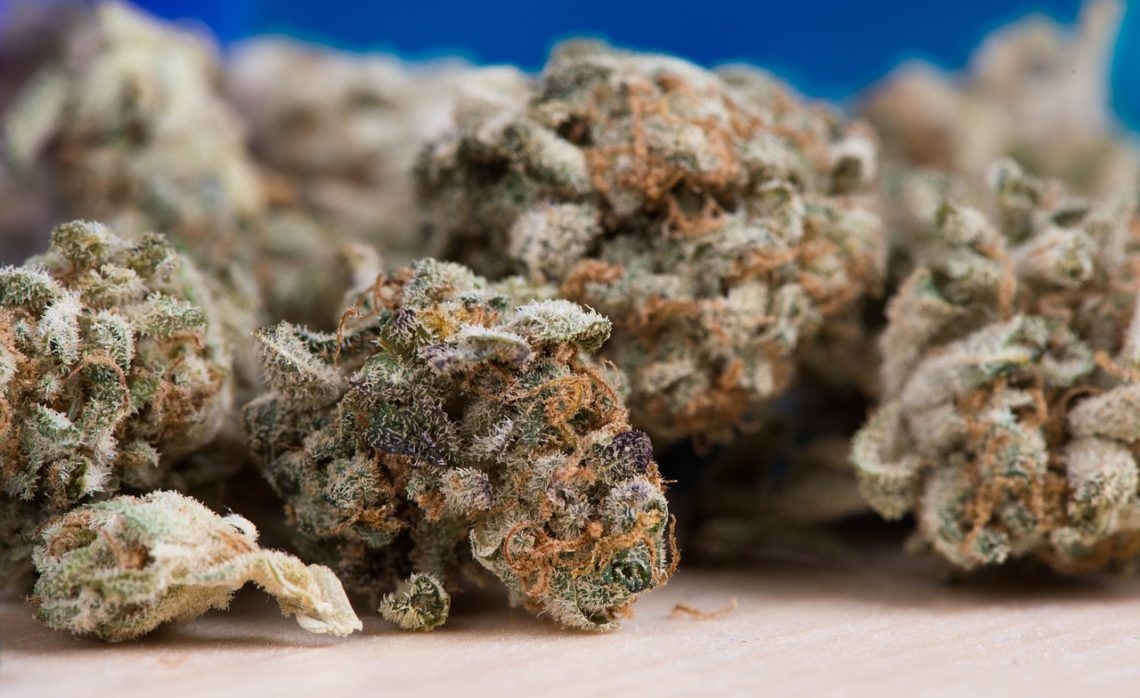
Beginning January 2018, recreational use of marijuana became legal in California, allowing persons 21 years and older to possess up to one ounce, or 28.5 grams of marijuana. The law was a direct result of Proposition 64 the Adult Use of Marijuana Act, which was approved in November of 2017. This new law does not change any statues or regulations pertaining to medicinal marijuana use, nor does it completely legalize marijuana use in every situation. As all laws, there are some strings attached that you should be aware of as a consumer.
The legalization of marijuana in California does not extend indefinitely, and you can still get incriminated for surpassing its limits. According to California Health and Safety Code § 11357, those limits are as follows:
HS 11357 Possession Offense
Type of Offense
Penalty Incurred
Possession of marijuana and/or concentrated cannabis by individuals under the age of 21
Infraction

California VC 23222(b) driving in possession of marijuana only pertains to marijuana that is not in a concentrated form, such as, hash; nor does it pertain to large amounts of marijuana.
Unlike, California Health and Safety Code 11359 Possession of Marijuana for Sale, which pertains to being caught with a large amount of marijuana in your vehicle. California Vehicle Code 23222(b) punishes those who are found guilty of driving with up to 1 ounce of marijuana in their cars.
Controlled substances for purposes of Health and Safety Code 11351 include the following:
Keep in mind that possession of controlled substances such as marijuana and methamphetamine for purposes of sale are considered separate offenses not covered under Health and Safety Code 11351.
For purposes of Health and Safety Code 11351, possession is established when an individual has direct and/or immediate control over the controlled substance. Typically, this is established when the individual possesses the controlled substance if they are carrying it on them. Possession can also be established if an individual has personal control over the substance such that the controlled substance was found near or around an area that the individual exercises control over, such as in the individual’s car or garage.
Under Health and Safety Code 11351, intent to sell can be established by showing the following:
As mentioned above, violating Health and Safety Code 11351 is considered a felony. Penalties include the following:
If you or someone you know has been charged with Health and Safety Code 11351, we invite you contact KAASS LAW today at (310) 943-1171 to speak to our criminal defense attorney for a free consultation.
Driving under the influence is a serious charge. You can have a citation for an open container violation even if you're dead sober. However, if law enforcement suspects you are driving impaired, they will conduct a DUI search. These can be stressful and, if convicted or arrested, financially costly, in addition to wasting a lot of your time.
A police officer can only search an individual's car if:
Should a police officer do an unlawful search and then find marijuana inside the car, that marijuana, which is deemed to be evidence, can be excluded for purposes of the case. Additionally, the case may also be dropped as a result of an unlawful search.
If you are pulled over and questioned about marijuana in your vehicle, it's essential to remain calm and exercise your rights:
Navigating California's marijuana laws, especially in the context of driving, can be complex. If you're in a legal dilemma for driving in possession of marijuana or a marijuana DUI, it's crucial to have experienced legal representation on your side. At KAASS LAW, we have a thorough understanding of these laws and can provide you with a strong defense. We will:
Don't think you can do this alone! Contact KAASS LAW today for a scheduled consultation service. Our office and its expert members can help and discuss your case so we may learn how we can help you navigate the legal complexities of driving in possession of marijuana in California.
The prosecution must prove beyond a reasonable doubt the following elements to convict the defendant of federal drug trafficking:
A counterfeit substance is a controlled substance that has the container or labeling of any trademark, identifying mark, trade name, number, imprint, device, or any likeness thereof, of a manufacturer, dispenser, or distributor or without authorization.
The defendant is likely to be charged with a federal drug crime charges in case the criminal activity:
Small amounts of drugs can be considered to be for personal use, and are often handled by local and state officials. But, in case the defendant is involved with larger amounts of drugs with the intent to distribute, his case is more likely to be handled by federal authorities.
The judge considers the following factors when determining the defendant’s sentence:
According to the Controlled Substance Act (CSA), controlled substances are divided into five schedules based on their perceived abuse potential, safety concerns, and medical utility. Drugs listed in Schedule I have the highest potential for abuse. The defendant can face a 10-year minimum sentence for manufacture or possession with the intent to distribute the following drugs:
The defendant can face up to 20 years in federal prison for a second offense, and a life sentence for a third offense. In case someone suffered great bodily injury or died as a result of the crime the penalties can double from a minimum of 20 years to a life sentence for a subsequent offense.
The defendant will also face a mandatory minimum sentence of 5 years in federal prison for smaller amounts of drugs.
The defendant will face harsher penalties in case he carried a firearm during a drug trafficking crime, was trafficking drugs near a federal facility or school, or used a minor under the age of 18 in drug operations.
At KAASS LAW, we have an experienced office in defending individuals against federal drug trafficking charges. We understand the complexities of federal law and are committed to providing our clients with the highest quality legal representation. If you are facing federal drug trafficking accusations, contact us today for a confidential consultation. Additionally, if you received any trouble from drugs hidden in a false compartment, we can also help! We will review your case, explain your options, and provide legal options in protecting your rights and your future. Don't face these serious charges alone. Let KAASS LAW fight for you. [contact-form-7 id="5673" title="KAASS LAW Contact Form"]
According to California Health and Safety Code a "controlled substance" can include a wide range of drugs, including, but not limited to stimulants, hallucinogens, depressants, opiates, cocaine, heroin, methamphetamine, PCP.
There are three types of controlled substance possession: actual possession, constructive possession and joint possession. Actual possession of a controlled substance means having drugs on person with immediate or direct physical control over it. Constructive possession means not having drugs on person but having the authority to control the possession of drugs. This means that the defendant does not need to be caught with drugs in his direct possession in order to be charged under HS 11350(a). Having joint possession means sharing actual or constructive possession with at least one other person.
The defendant is excused from violation of Health and Safety Code 11350 as long as he held valid prescription for the drug and the possession was consistent with the purpose of the prescription. A legal written prescription is given form physician, dentist, podiatrist, or veterinarian licensed to practice in state. This defense won’t apply if the defendant possessed a fraudulent prescription for the drug or was found in possession of more drugs than was prescribed.
Temporary possession will serve as a legal defense in case the defendant possessed the drugs with the aim to dispose or destroy them for terminating its unlawful possession. This defense won’t absolve the defendant from criminal culpability in case he exercise control over the drug but willingly dispose it.
Health & Safety Code section 11350 specifically punishes for the possession of something illegal. Therefore, in case the defendant did not actually or constructively possess the controlled substance then he can't be committed in violation under the essence of this law.
According to Health & Safety Code section 11350 the defendant must be aware of the presence of controlled substance and knew its nature or character as a controlled substance. Therefore, knowledge is an essential part of this crime. In case the defendant wasn’t aware that the possessed drugs were illegal, he must be acquitted of illegal possession
Possession of controlled substances under Health and Safety Code 11350 is misdemeanor. Penalties for conviction are the following:
If the defendant has prior convictions for especially serious felonies, gross vehicular manslaughter while intoxicated, sex crimes against a child under 14, or sexually violent offenses he will face felony penalties such as sixteen months, two or three 3years in prison. Additionally, in case the defendant is not a citizen of the United States, a conviction for possession of illegal drugs can lead to deportation, denial of reentry and denial of naturalization.
For answers to any other questions you may still have about California Health and Safety Code 11350, about being present while controlled substances are used, or to discuss your case confidentially with our team of experienced California criminal defense attorneys, give us a call at (310) 943-1171. Our lawyers in Glendale, Los Angeles County, CA, are highly dedicated to serving the needs of our clients.
[video width="1280" height="720" mp4="https://kaass.com/wp-content/uploads/2019/11/Possession-of-controlled-substance.mp4"][/video]
Drug counseling and community service hours for minors and a fine of $100 for those 18 and older
Owning more than 28.5 grams of marijuana and/or more than 8 grams of concentrated cannabis for minors (under 18 years of age)
Infraction
Drug counseling and community service hours
Having marijuana and/or concentrated cannabis in a K-12 institution while a minor (under 18 years of age)
Infraction
Drug counseling and community service hours
Owning more than 28.5 grams of marijuana and/or more than 8 grams of concentrated cannabis (18 years of age and up)
Misdemeanor
A maximum sentence of 6 months in county jail as well as a $500 fee
Having marijuana and/or concentrated cannabis in a K-12 institution (18 years of age and up)
Misdemeanor
Up to a $250 fee for the first offense, with subsequent offenses incurring additional penalties
Possession of more than 28.5 grams of marijuana or more than 8 grams of concentrated cannabis (hashish) is still illegal under California’s Health and Safety Code 11357. The above chart summarizes the consequences one may face for having excessive amounts of marijuana. Typically, for adults these consequences are deemed misdemeanors and will usually result in a fine of no more than $500 and/or 6 months in county jail, while for minors the crime is merely an infraction and the penalties are to attend drug counseling sessions and community service hours.
Having marijuana on school grounds is also illegal: for adults it is a misdemeanor and for minors it is an infraction. The penalties for minors who commit this crime are identical to the penalties that a minor may face if they possess excessive amounts of marijuana. For adults, it will usually result in a $250 fee for the first offense. Bear in mind that possessing any amount of marijuana at all as a minor is still illegal even in California, and the consequences range from paying a fine to facing drug education or counseling programs and community service.
There are several legal defenses that a skilled Los Angeles marijuana defense attorney can provide in cases that involve charges of illegal marijuana possession in California. These defenses include:
-You didn’t own the marijuana in question
-You were not aware that you had any marijuana
-The marijuana in question was procured in an illegal search or seizure
If you or someone you know is accused of violating California Health and Safety Code 11357 or California Vehicle Code 23222(b) illegal to possess marijuana while driving a vehicle we welcome you to give us a call at (310) 943-1171 to speak to a defense attorney for a free consultation.
KAASS LAW is authorized to practice law in California. The above content is intended for California residents only. This content provides only general information which may or may not reflect current legal developments. KAASS LAW expressly disclaims all liability in respect to actions taken or not taken based on any of the contents of this website. The above content DOES NOT create an attorney-client relationship. Our Los Angeles litigation lawyers do not represent you unless you have expressly retained KAASS LAW in person at our office.
A Los Angeles criminal defense attorney can help you with the sort of legal assistance that you require regarding drug crimes in the county. Our lawyers in Glendale, Los Angeles, CA are here to help understand your legal rights. Please call our office at (310) 943-1171 or contact us via email at [email protected]