
California Penal Code Section 273.5 Corporal Injury on a Spouse also referred to as "domestic violence" outlines the specific elements the prosecution is required to prove in order to be found guilty of domestic violence.
California Penal Code Section 243(e), domestic battery is similar to PC 273.5. The primary difference between the two domestic violence laws is the level of injuries sustained by the victim. Penal Code 243(e)(1) is the least serious of California domestic violence laws and is always considered to be a misdemeanor offense. One key aspect to consider is you can be convicted of domestic abuse under California Penal Code 243 (e) even if there was no physical injury.
There are a few legal defenses to penal code section 273.5 and are as follows:
People have the legal right of self-defense when they are attacked. The most common legal defense strategy is to make the argument you were acting in self-defense or defense of another person. Injuries caused while acting defensively should not lead to a conviction under PC 273.5(a). The amount of force one can legally use to defend him or herself depends upon the circumstances of each case. Under Judicial Council of California Criminal Jury Instructions 505 and 506, you are considered to have used reasonable self-defense if:
In order for this defense to be successful, it must be proved that you did not have the intent to strike or injure the victim. Individuals charged with PC 273.5(a) must willfully harm an intimate partner to be convicted. If you accidentally inflicted corporal injury on someone this should not lead to fines and incarceration.
There are plenty reasons you might be facing a false accusations of Penal Code 273.5 PC violations. It is common for individuals to be mistakenly accused for corporal injury. In these cases, the accusation is characteristically grounded on false allegations instigated out of a desire for revenge, anger or jealousy
Corporal injury to spouse under California Penal Code Section 273.5 is known as a “wobbler, and can be filed as either a felony or a misdemeanor. Their decision is typically based on the facts and circumstances of the case and your prior criminal record. If the victim sustained serious injuries or you have a history of domestic violence incidents, the case will normally be filed as a felony crime. If you are convicted of a misdemeanor case for PC 273.5 inflicting corporal injury on a spouse, you will face:
If convicted of a felony spousal abuse case, you will face:
Additionally, the legal penalties for a felony conviction can be increased if you have a prior conviction within the past 7 years for corporal injury on a spouse, domestic battery, assault causing serious bodily injury, assault with a deadly weapon, or sexual battery.
The penalties of a misdemeanor or felony corporal injury conviction will probably include a protective or restraining order stopping you from getting into any contact with the victim, for a maximum of ten years. Furthermore, a conviction under PC 273.5(a) can lead to additional punishments. Individuals in Los Angeles convicted of corporal injury to a spouse may lose their right to Firearm Ownership and Professional Licenses.
Often times the victim may file a domestic violence restraining order which is a court order which directs the abuser to not contact and abuse the victim. Furthermore, it regulates and restricts the behavior of the abuser. To obtain a domestic violence restraining order the victim must prove by a preponderance of the evidence that the victim has suffered some type of abuse which could include bodily injury, including causing or attempted to cause bodily injury, sexual assault, or show that the victim has been placed in reasonable apprehension of receiving imminent serious bodily injury.
Hire the most dedicated Glendale criminal defense and Los Angeles restraining order attorney. Our attorneys at KAASS LAW are highly dedicated to help our clients in every way possible. You can rely on our experienced lawyer to carefully analyze the facts of your case to prove the facts necessary. We back all of our clients and we invite you to give us a toll free call at (310) 943-1171 to speak to our experienced Glendale domestic violence attorney today.
KAASS LAW, 815 E Colorado St #220, Glendale, CA 91205, (310) 943-1171
See Stalking
See our Criminal Law Page for Further Info.
Follow us on Facebook at Kaass Law.
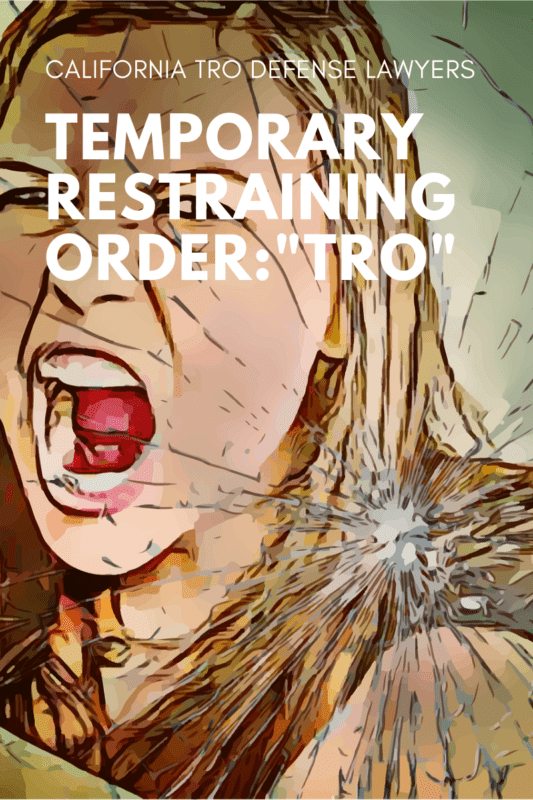
A Temporary Restraining Order, "TRO", is issued by a court which temporarily protects people from Civil Harassment, Workplace Violence, Domestic Violence, and Elder Abuse or Dependent Adult Abuse. A TRO directs the abuser to not contact and abuse the victim. It regulates and restricts the behavior of the abuser. A TRO is generally issued for 21 days. In some cases it can last a bit longer, usually until the abuser is served with the TRO. There are several types of Restraining Orders.
Domestic Violence Restraining Orders – Domestic Violence Restraining Orders require a special relationship between the parties such as: married or registered domestic partners, divorced or separated, dating or used to date, living together or used to live together, or persons closely related by blood such as parent, child, brother, sister, grandmother, grandfather, in-law.
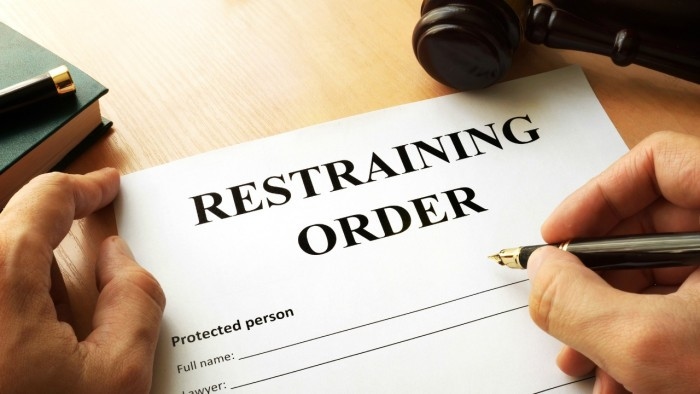
Restraining orders are commonly referred to as "RTO"s. Being served with a restraining order can be stressful, especially if it is a domestic violence restraining order. In California, there are a few different types of restraining orders such as civil harassment, domestic violence restraining orders, restraining orders involving elder abuse, workplace violence, emergency protective orders, and criminal protective orders. Each type of restraining order has various components of which the person who filed the restraining order has the "burden of proof" in order to obtain the restraining order, the duration of the restraining order, and the legal elements required to prove in order to obtain that restraining order. The following tips may help you successfully defend a California restraining order action.
The first essential preparation for an effective restraining order defense is to carefully review the allegations made against you order to determine if those allegations do or do not apply to each element required for the particular order of protection being requested.
To obtain a domestic violence restraining order the victim must prove by a preponderance of the evidence that the victim has suffered some type of abuse which could include bodily injury, including causing or attempted to cause bodily injury, sexual assault, or show that the victim has been placed in reasonable apprehension of receiving imminent serious bodily injury.
Workplace Violence – An employer may obtain a restraining order to protect an employee from being subjected to unnecessary violence and threats of violence at the workplace. The restraining order extends protection to certain family members or household members and other employees at the workplace.
Civil Harassment - Restraining Orders involving Civil Harassment(s) there does not need to be a special relation between the parties. A civil harassment restraining order is issued when a person is being subjected to stalking, threat of violent, sexual assault, or some kind of harassment, such as unlawful assault and battery or conduct that severely alarms, annoys, or harasses the other person and serves no legitimate purpose. Civil harassment restraining orders are usually issued between neighbors, roommate, friend, family member more than 2 degrees removed, like an aunt or uncle, a niece or nephew, cousins, and more distant relatives, or strangers. A few scenarios considered as "harassment" by the court include:
Elder or Dependent Adult Abuse – An elder or dependent adult may request a restraining order to seek protection against abuse. An elder is defined as anyone 65 years or older and a Dependent Adult is a person between the ages of 18 and 64 years of age that has disabilities that prevent that person from performing the normal activities in life. The restraining order may be filed for the elder or dependent adult by a conservator or a trustee of the elder or dependent adult, a guardian ad litem, or any person legally authorized to seek relief.
For a person to obtain a TRO in California, that person must go to court and fill out the required paperwork explaining to the judge what occurred and why that person needs a restraining order. This person can ask the judge to issue a Temporary Restraining Order without notifying the other party. Most judges are inclined to issue the Temporary Restraining Order if enough facts demonstrate the need for a restraining order. The Temporary Restraining Order is valid and in effect until the actual court hearing, which is scheduled three weeks after issuing the TRO. The person obtaining the TRO must have the court papers and TRO served on the other party within five days of the scheduled court hearing. It is after personal service the TRO is in full force and effect. This means there must be proof that the defendant was personally served with the TRO.
Hire the most dedicated Los Angeles restraining order attorney. Our attorneys at KAASS LAW are highly dedicated to help our clients in every way possible. You can rely on our experienced restraining order lawyer to carefully analyze the facts of your case to prove the facts necessary. Whether you would like to to have a restraining order filed against a person, or if you are in need of defense against a restraining order. We back all of our clients and we invite you to give us a toll free call at (310) 943-1171 to speak to our experienced restraining order lawyers today.
You may also contact us by using the form below and one of our team members will contact you back at your earliest convenience.
[contact-form-7 id="5673" title="KAASS LAW Contact Form"]
If you are defending against a restraining order, you have to keep in mind that the court doesn't have all day to listen to your case and thus you must be prepared when you come into court. First, it is important that you prepare your evidence and bring them with you to court. You may bring declarations from other people that have personal knowledge of the facts that surround that basis of your restraining order, your own declaration, along with any photographs, videos, text messages, emails, or any other piece of evidence you intend to show to the court.
If you are also facing criminal charges which stem from the matter of which is the basis for the restraining order, keep in mind of your Fifth Amendment right against self-incrimination. This means, if you testify during a restraining order trial, your testimony may and most likely will be used against you in the pending criminal case. Therefore, being mindful of the statements you make during court is very important. The prosecutors can request the transcript of your testimony from the restraining order hearing from the court, which may aid them in building their case against you in the pending criminal case. If you are in a situation where you face both criminal charges and a restraining order action, it is imperative that you seek legal help in order to insure the best possible outcome, as these types of criminal matters become extremely tricky.
Keep in mind that if the person that intends to file a restraining order against you, they are further legally obligated to have you personally served with the restraining order.
It is always wise to consult with an experienced local attorney who has vast experience in defending against restraining orders to discuss your various options. In order to ensure you have the best possible outcome and an effective defense is to have an experienced restraining order lawyer handle your case for you. Your restraining order lawyer will prepare a solid defense and attempt to persuade the court that the allegations asserted by the other party do not fit the definition of abuse.
Often times, defendants are not properly prepared for these type of hearings and almost immediately make damaging admissions that necessitate a restraining order be issued, even if the admitted activity was in fact innocent. Defending yourself against a restraining order can be difficult if all that you have are the statements made by the victim against your own word where there are no pictures or witnesses to support your side of the story. Further, if the person who filed the restraining order against you is represented by an attorney, it is even more imperative for you consider hiring a restraining order attorney immediately, as opposed to defending yourself If you were served with an restraining order or temporary restraining order, our knowledgeable restraining order attorney in Los Angeles, CA with KAASS LAW can help defend you. We are highly dedicating to serving the needs of all our clients. Call us at (310) 943-1171, 24 hours a day, 7 days a week for a free consultation tailored to the specifics of your case, our attorneys speak English, French, Spanish, Russian, Armenian, and Italian. You may also get directions to our law firm on Google Maps fast and easy.