

Air pollution in scientific literature is usually defined as “releasing pollution into the air, which can be detrimental to human health and the planet as a whole. WHO data shows that air pollution kills over seven million people worldwide every year, thus it is a major threat to the health of people and the climate of the earth. This causes the USA as a whole and the states to develop legal regulations for air pollution control and punishment of air pollutants. The Clean Air Act authorizes the US Environmental Protection Agency to protect public health with the help of regulating the emissions of harmful air pollutants. In California, Health and Safety Code lists the actions which are considered unlawful from the perspective of air pollution. The appropriate sections are 2400, 42400.1, 42400.2, 42400.3, 42400.3.5, 42400.4, which will further be examined throughout this article. Any violation of a section is a misdemeanor.
This section is the general provision, which considers the violation of law designed to protect the quality of the State's air by an entity as an offense. Penalties for violation of this section Under the corresponding section, the entity can be using these punishments:
This section regulates that it is an offense to emit any air contaminant negligently, which may violate state laws or other relevant regulations. Penalties for violation of this section Under relevant legal regulations, the committed actions shall include punishment by:
This section states that it is a crime for the defendant to emit an air contaminant in violation of state laws, and to commit the action knowingly. Penalties for violation of this section The violation of section 42400.2 charges the party and includes these punishments:
Under this section, it is a crime for the accused person or an entity:
Penalties applied for violation of this section The punishment of the violations of section 42400.3 includes :
Under the mentioned section, it is considered to be a crime for the defendant to:
Penalties applied for violation of this section The punishment of the violations of the mentioned section includes:
This Section is a part of the programs of the Environmental Protection Agency of the US, namely Title V permit programs, which issue permits to the entities to help limit the emissions of air contaminants. Penalties for violation of the relevant section No imprisonment as a penalty applies to the above-mentioned section. The accused shall be subject to the imposition of a fine in the amount of not exceeding 10000$. Are there any defenses to overcome penalties imposed by the relevant regulations of law?
If you have any questions, contact our Glendale personal injury lawyer today for a consultation and case review. Please feel free to give our office a call at 310.943.1171.
Under California Penal Code 186.10 money laundering is a financial crime referring to transactions intended to promote or facilitate criminal activities, or transactions knowingly made with proceeds from criminal activity.
To prove money laundering under Penal Code 186.10 the prosecutor must prove the following elements:
Money laundering is the act of using stolen funds to conduct a transaction through a bank or some other financial institution. California law lists the types of activities which can qualify as transactions, those are: withdrawals, bank deposits, wire transfers, fund transfers, payments, and other financial activities. Attempts to conduct business can also qualify as money laundering even if the transaction isn’t finished. In case the funds are used for making purchase or for any other reason, they won’t be considered to have been laundered under California law.

Beginning January 2018, recreational use of marijuana became legal in California, allowing persons 21 years and older to possess up to one ounce, or 28.5 grams of marijuana. The law was a direct result of Proposition 64 the Adult Use of Marijuana Act, which was approved in November of 2017. This new law does not change any statues or regulations pertaining to medicinal marijuana use, nor does it completely legalize marijuana use in every situation. As all laws, there are some strings attached that you should be aware of as a consumer.
The legalization of marijuana in California does not extend indefinitely, and you can still get incriminated for surpassing its limits. According to California Health and Safety Code § 11357, those limits are as follows:
HS 11357 Possession Offense
Type of Offense
Penalty Incurred
Possession of marijuana and/or concentrated cannabis by individuals under the age of 21
Infraction

California Penal Code § 1000 indicates an arrangement commonly known as a pretrial diversion or a deferred entry of judgment, in which a qualifying drug defendant requests to get their case put on hold for a set period of time while the defendant completes a state-approved drug rehabilitation or educational program. Penal Code § 1000 is very important because it enables some defendants to avoid conviction entirely with the deferred entry of judgment, or DEJ for short (this is also referred to as a pretrial diversion).
Whether DEJ applies for any given case will depend on several factors, such as age, previous criminal history, and the crime in question. For instance, DEJ is more restricted for adults, applying only for certain types of drug offenses. On the other hand, for juveniles, deferred entry of judgment usually applies for most first-time felonies.
First, a defendant asks to complete an approved program in any county in California. The court determines the eligibility of the defendant and, once approved, provides the defendant with a set period of time in which to complete the program. California courts have both . A list of state-approved programs can be found at the courthouse in which the hearing took place. All of these programs will assess the defendant and must ensure a minimum of 20 hours of drug education or rehabilitation. At the end of the program, an assessment report must be provided to the court, detailing the defendant’s progress and successful completion of the program.
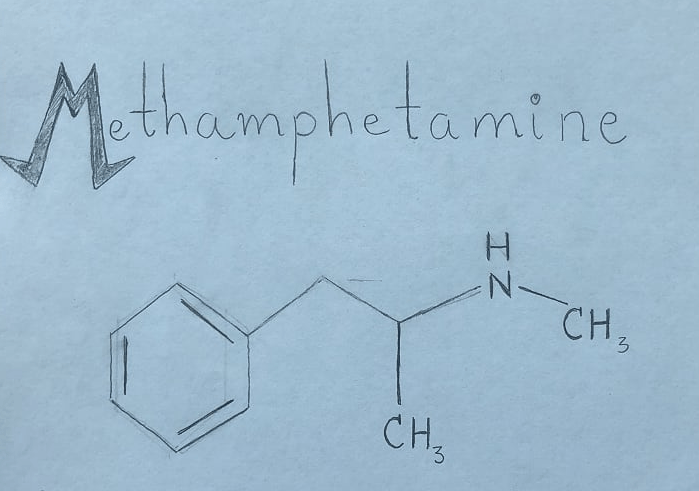
In California, there are many different health and safety codes and statutes in place to protect citizens. Some of these focus on illegal substances, such as methamphetamine, and the consequences one may face for possessing them.
Being accused of possessing meth is a serious crime because it is a controlled substance under the California Uniform Controlled Substances Act. Under California Health and Safety Code Section 11377, the mere possession of meth is considered a misdemeanor, which involves a penalty of up to $1,000 and a year in prison. However, these repercussions can be far more severe, depending on how the drug was found and whether or not the prosecutors determined if there was an intent to sell or distribute the drug. Therefore, it stands to reason that you should be aware of the ways in which a prosecutor can prove meth possession. So...
In order for a prosecutor to convict you of meth possession under Health and Safety Code Section 11377, they must be able to prove or show beyond reasonable doubt that: (1) you had actual possession of the drug in question; (2) you knew the drug was methamphetamine, a controlled substance, and (3) you had possession of usable amounts of the drug, i.e. more than just trace amounts of methamphetamine.
In California there are two specific laws that relate to money laundering: California Penal Code Section 186.10 and California Health and Safety Code Section 11370.9. Penal Code Section 186.10 deals with money that is related to any type of criminal activity, California Health & Safety Code covers money earned from drug crimes.
In order to be convicted of Health & Safety Code Section 11370.9 money laundering in connection with drug crimes, the prosecutor needs to prove the following elements:
In contrast Health & Safety Code doesn’t require the money to pass through a bank or other financial institution. A person can be charged with money laundering of drug proceeds even if the money was never converted from cash.
In California law both forms of money laundering are considered wobblers. Penalties for misdemeanor money laundering include:
Penalties for felony money laundering under Penal Code 186.10 include:
Penalties for felony Health & Safety Code 11370.9 criminal charges include:
[video width="1280" height="720" mp4="https://kaass.com/wp-content/uploads/2019/11/Money-Laundering.mp4"][/video]
Hire the most dedicated California money laundering defense lawyer to help defend and fight your Penal Code 186.10 charges. Our attorneys at KAASS LAW are highly dedicated to help our clients in every way possible. You can rely on our experienced lawyers in Glendale, Los Angeles, California, to carefully analyze the facts of your case to prove the facts necessary. We back all of our clients and we invite you to give us a toll free call at (310) 943-1171 to speak to our experienced Glendale criminal battery attorney today. Get in touch with us at KAASS LAW, 815 E Colorado St #220, Glendale, CA 91205, (310) 943-1171 at any time.
Drug counseling and community service hours for minors and a fine of $100 for those 18 and older
Owning more than 28.5 grams of marijuana and/or more than 8 grams of concentrated cannabis for minors (under 18 years of age)
Infraction
Drug counseling and community service hours
Having marijuana and/or concentrated cannabis in a K-12 institution while a minor (under 18 years of age)
Infraction
Drug counseling and community service hours
Owning more than 28.5 grams of marijuana and/or more than 8 grams of concentrated cannabis (18 years of age and up)
Misdemeanor
A maximum sentence of 6 months in county jail as well as a $500 fee
Having marijuana and/or concentrated cannabis in a K-12 institution (18 years of age and up)
Misdemeanor
Up to a $250 fee for the first offense, with subsequent offenses incurring additional penalties
Possession of more than 28.5 grams of marijuana or more than 8 grams of concentrated cannabis (hashish) is still illegal under California’s Health and Safety Code 11357. The above chart summarizes the consequences one may face for having excessive amounts of marijuana. Typically, for adults these consequences are deemed misdemeanors and will usually result in a fine of no more than $500 and/or 6 months in county jail, while for minors the crime is merely an infraction and the penalties are to attend drug counseling sessions and community service hours.
Having marijuana on school grounds is also illegal: for adults it is a misdemeanor and for minors it is an infraction. The penalties for minors who commit this crime are identical to the penalties that a minor may face if they possess excessive amounts of marijuana. For adults, it will usually result in a $250 fee for the first offense. Bear in mind that possessing any amount of marijuana at all as a minor is still illegal even in California, and the consequences range from paying a fine to facing drug education or counseling programs and community service.
There are several legal defenses that a skilled Los Angeles marijuana defense attorney can provide in cases that involve charges of illegal marijuana possession in California. These defenses include:
-You didn’t own the marijuana in question
-You were not aware that you had any marijuana
-The marijuana in question was procured in an illegal search or seizure
If you or someone you know is accused of violating California Health and Safety Code 11357 or California Vehicle Code 23222(b) illegal to possess marijuana while driving a vehicle we welcome you to give us a call at (310) 943-1171 to speak to a defense attorney for a free consultation.
KAASS LAW is authorized to practice law in California. The above content is intended for California residents only. This content provides only general information which may or may not reflect current legal developments. KAASS LAW expressly disclaims all liability in respect to actions taken or not taken based on any of the contents of this website. The above content DOES NOT create an attorney-client relationship. Our Los Angeles litigation lawyers do not represent you unless you have expressly retained KAASS LAW in person at our office.
Upon finishing the DEJ program, the court has an obligation to dismiss the drug charges against you. As such, the benefits of completing the program are that:
Throughout your participation in the court-sanctioned program, the court may determine that your efforts or participation are not satisfactory, or that some other issue has come up. Any of these may disqualify your eligibility for the diversion program. Some of these reasons can include:
Basically, a defendant can be removed from the DEJ program if at any point they fail to complete the program satisfactorily or if they get convicted of a felony or a misdemeanor involving violence. In that case, the defendant will get dropped from the program and sentenced per the underlying charge(s).
There are two factors that are responsible for determining your eligibility for a DEJ. The first is the type of drug offense itself and the second is your previous criminal history.
According to California Penal Code § 1000, some drug offenses are eligible for deferred entry of judgment. Most often, these are:
*A ‘controlled substance’ refers most commonly to such drugs as Cocaine, Marijuana, Heroin, Methamphetamines, Ketamine, Ecstasy, Vicodin, Codeine, and GHB.
Your prior criminal history is the other major factor used to determine whether your case is eligible for a DEJ. The conditions are:
You should know that there are some strings attached with the deferred entry of judgment. It does require the defendant to plead guilty, with the condition that the court does not enter judgment. Thus, the final sentencing, or conviction, is never finalized. The case is therefore left in a limbo period, or deferment. During this period, the defendant must then successfully complete the appropriate, state-approved program. The court will look over the details of the case again and if everything was correctly done, the charge against the defendant will be dismissed.
The details surrounding the deferred entry of judgment can get complicated and murky. We can help you to assess if a pretrial diversion or a DEJ is possible given the details of your case. To speak to an Glendale criminal defense attorney, please call our firm at (310) 943-1171 or email us at [email protected].
KAASS LAW is authorized to practice law in California. The above content is intended for California residents only. This content provides only general information which may or may not reflect current legal developments. KAASS LAW expressly disclaims all liability in respect to actions taken or not taken based on any of the contents of this website. The above content DOES NOT create an attorney-client relationship. KAASS LAW does not represent you unless you have expressly retained KAASS LAW in person at the KAASS LAW office. KAASS LAW helps clients in: Los Angeles, Burbank, Hollywood, Glendale, Van Nuys, North Hollywood, Studio City, Highland Park, Eagle Rock, Sunland, Tujunga, Sylmar, San Bernardino, La Crescenta, La Canada, Beverly Hills, Westwood, Santa Monica, Brentwood. Pacoima, Montebello, Commerce, Alhambra, Downey, Bell, Maywood, Walnut Park, Vernon, Lynwood, Echo Park, Silverlake, Mission Hills, Northridge, Woodland Hills, Encino, Canoga Park, North Hills, Porter Ranch, Chatsworth, Reseda.
While the burden to prove these things falls on the State, you should be prepared with ample evidence to show otherwise, just in case they do manage to produce sufficient evidence in the courtroom. Bear in mind there are two different kinds of possession for which you may be convicted. The first kind is actual possession, which entails that the authorities discovered the drug on your person, meaning in your pocket, clothes, or bag. The second kind is constructive possession, which simply means that the authorities found the drug in a place that you have access to, such as your house, car, or office. If you did not expressly admit to having knowledge of the illegal substance of methamphetamine being in your possession, the prosecutor will have to meticulously prove that through evidence. Evidence can include the way you behaved or reacted during the search or arrest process. As an example, if you attempted to hide or get rid of the drug, then they could reasonably assume that you had knowledge of the drug and its illegality. However, assumptions can work against the prosecutor as well.
One of the first things your lawyer will do is to determine whether the police encounter that led up to the discovery of the meth was legal. In other words, the prosecutor cannot use evidence against you in a court of law if it was obtained illegally. Remember that the police must adhere to strict laws which are upheld by the United States Constitution, including when they stop and search vehicles, when they enter into private property, and even when they arrest or detain someone on suspicion of illegal substance possession. Should a law enforcement agent knowingly, or inadvertently, violate the suspect’s constitutional rights, then your lawyer can request to suppress the evidence being presented against you.
There are many different avenues and possibilities that a lawyer can explore with you in order to best gauge what your next optimal move will be. Getting charged with possession of a controlled substance may seem overwhelming and getting out of that situation even more so, but we will guide you through the criminal justice process and get you the best possible result. We invite you to give KAASS Law a toll free call at (310) 943-1171 to have a free consultation with our skilled defense attorneys.